

Pre-Listing Home Inspection in Maryland: Should African Sellers Get One?
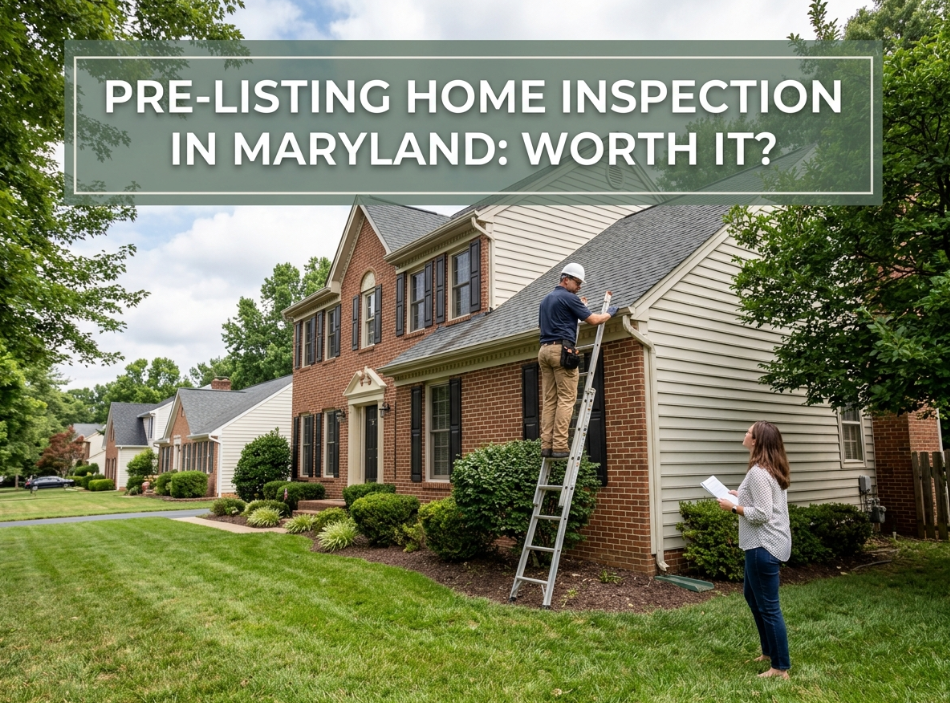
A pre-listing home inspection in Maryland can help when you are unsure about the roof, HVAC, foundation, plumbing, electrical system, or past moisture. It is not required simply because you are selling. The real benefit is time. You can investigate problems, compare repair costs, adjust the price, or prepare for buyer questions before an offer puts you on a deadline.
My name is Eze Okwodu. I was raised in Nigeria and have spent nearly 20 years working in DMV real estate as an agent and investor.
At The Eze Way, my experience includes hundreds of regional transactions, a 5.0 Zillow rating, and 4.9 from 569+ Google reviews. I help sellers make property decisions before pressure starts.
Should You Inspect Before Listing?
I would not automatically tell every African seller to order a full inspection.
The decision depends on what you already know about the property and what could surprise a buyer later.
A pre-listing inspection is more useful when:
- The house is older.
- Maintenance has been delayed.
- The basement has had moisture.
- The roof age is uncertain.
- HVAC or plumbing concerns already exist.
- You inherited the property and know little about its condition.
- You need predictable sale proceeds for your next move.
- A failed contract would create a serious timing problem.
A newer home with documented improvements may need less investigation.
What Does a House Inspection Consist Of?
A Maryland home inspection is mainly a visual review of readily accessible systems and components. It does not involve tearing open walls or guaranteeing every hidden problem will be found.
Maryland standards cover areas such as:
- Foundation and visible structure
- Roof and drainage components
- Exterior walls and grading
- Plumbing
- Electrical system
- Heating and cooling
- Attic and insulation
- Interior walls and ceilings
- Floors, doors, and windows
- Basements and accessible crawl spaces
- Fireplaces and certain installed components
The official Maryland home inspection standards explain what a licensed inspector examines and what falls outside a normal inspection.
Maryland Home Inspection Requirements Matter
Maryland does not require a seller to order an independent inspection simply to complete the state’s residential property disclosure process.
That distinction matters.
The seller still has disclosure responsibilities based on the applicable Maryland form and actual knowledge, but selling does not automatically create a duty to investigate the entire property.
The Maryland residential property disclosure law specifically states that sellers are not required to undertake an independent inspection merely to make the required disclosures.
Who Can Do a Home Inspection in Maryland?
Do not treat a handyman’s walk-through as the same thing as a licensed home inspection.
Maryland regulates professional home inspectors.
When comparing home inspection companies in Maryland, check:
- Current Maryland license
- Written inspection scope
- Insurance
- Experience with similar homes
- Sample report quality
- Turnaround time
- Whether specialist referrals are explained clearly
A cheap inspection that creates more questions than answers is not a bargain.
Full Inspection or Targeted Inspection?
This is one of the most useful decisions sellers can make.
You do not always need a full-house inspection.
| Your situation | Better starting point |
| Older home with several unknowns | Full pre-listing home inspection |
| Only the roof concerns you | Targeted roof evaluation |
| Possible foundation movement | Relevant inspection, then engineer if needed |
| Past basement moisture | Targeted moisture or drainage evaluation |
| HVAC is the main concern | HVAC contractor or targeted inspection |
| Recently renovated home | Selling review before ordering more inspections |
| Known fixer sold as-is | Pricing and disclosure strategy first |
Maryland permits limited-scope inspections when the scope is clearly defined.
That can save money when one system is creating the real uncertainty.
A Bowie Seller Can See the Benefit Quickly
Imagine a Nigerian couple preparing to sell their Bowie home.
They need the equity for a larger house in Upper Marlboro and want the current sale to close without a major surprise.
A pre-listing home inspection in Maryland finds staining near one basement wall.
Nothing has failed yet, but the report recommends further evaluation.
Now the couple has time to:
- Find the moisture source.
- Get contractor estimates.
- Decide whether to repair it.
- Understand the likely cost.
- Adjust the listing strategy.
- Discuss disclosure properly.
- Protect their expected seller net.
Finding the same issue during the buyer’s inspection creates a different conversation.
The buyer now has leverage, a deadline, and possibly less confidence.
Do Not Repair Everything in the Report
A long inspection report can scare sellers because every small item appears on paper.
Do not treat every observation as a mandatory repair.
I would sort findings into four groups:
| Finding | Practical response |
| Cheap, obvious problem | Fix it |
| Important but manageable | Get estimates |
| Expensive system issue | Compare repair, credit, and pricing options |
| Technical uncertainty | Get a specialist opinion |
A loose railing and possible foundation movement do not belong in the same decision bucket.
That sounds obvious, but sellers often spend money because an item appears in bold on a report.
Home Inspection and Repair Should Follow the Seller Net
Suppose an inspector says your older HVAC system is functioning but nearing the end of normal service life.
Replacing it might cost thousands.
Before spending that money, ask:
- Is the system working now?
- Will replacement materially improve marketability?
- Could buyers accept a credit instead?
- How much would buyers likely discount the condition?
- Does the repair protect more value than it costs?
- How much cash do you need after closing?
My Maryland home selling process looks at repairs through the sale, pricing, competition, and expected proceeds, not simply the length of an inspection report.
Will the Buyer Still Order an Inspection?
Very possibly.
A seller’s inspection does not replace home buyer inspections.
Maryland’s disclosure rules specifically recognize that buyers may still obtain an independent inspection.
That means your report should not be treated as a way to stop the buyer from inspecting.
Its value is different:
- You learn earlier.
- You control the timing.
- You can gather estimates.
- You can prepare explanations.
- You can make repair decisions without a three-day panic.
- You can price known conditions more intelligently.
A buyer may still find something different later.
Can Two Inspectors Find Different Things?
Yes.
A home inspection procedure is visual and non-invasive. Maryland standards also state that an inspection is not technically exhaustive and may not identify concealed conditions.
Weather, access, furniture, system use, and inspector judgment can all affect what is observed.
A seller should never treat a clean report as a warranty that nothing else exists.
That is also why an inspector may recommend:
- Structural engineer
- Licensed electrician
- HVAC technician
- Plumber
- Roofer
- Pest specialist
The right specialist can be more valuable than ordering another general inspection.
Should You Inspect an As-Is Home?
Not always.
If you already know the home needs major work and plan to price it accordingly, another broad inspection may not change your strategy.
For example, suppose a Fort Washington property clearly needs:
- Roof replacement
- New flooring
- HVAC work
- Kitchen updates
- Exterior repairs
If you do not plan to renovate, your money may be better spent understanding market value and the likely buyer pool.
A targeted inspection still makes sense when one unknown issue could dramatically change the price.
Inspection Findings Can Affect Buyer Credits
A buyer may use their own inspection to request repairs or closing help later.
That is another reason to understand larger defects before listing.
Suppose you already know the roof needs attention.
You can get estimates before marketing instead of seeing an unsupported $20,000 buyer request after contract.
If inspection findings turn into negotiation, my seller concessions in Maryland guide explains why every repair credit should be checked against your final proceeds.
Decide What You Need to Know First
A pre-listing home inspection in Maryland is valuable when the information changes your selling decision.
Sometimes a full inspection is worth paying for.
Sometimes one targeted evaluation is smarter.
Before ordering anything, I would rather review the property, likely buyer concerns, market competition, and seller goals.
That prevents spending money just because inspection sounds like the safest option.
If you are preparing to sell in Bowie, Upper Marlboro, Hyattsville, Clinton, Lanham, or elsewhere in Prince George’s County, contact me through The Eze Way.
Start with one practical question:
What could a buyer discover later that you would rather understand before the home hits the market?