Selling a House With Solar Panels in Maryland: What Happens to the Lease or Loan?
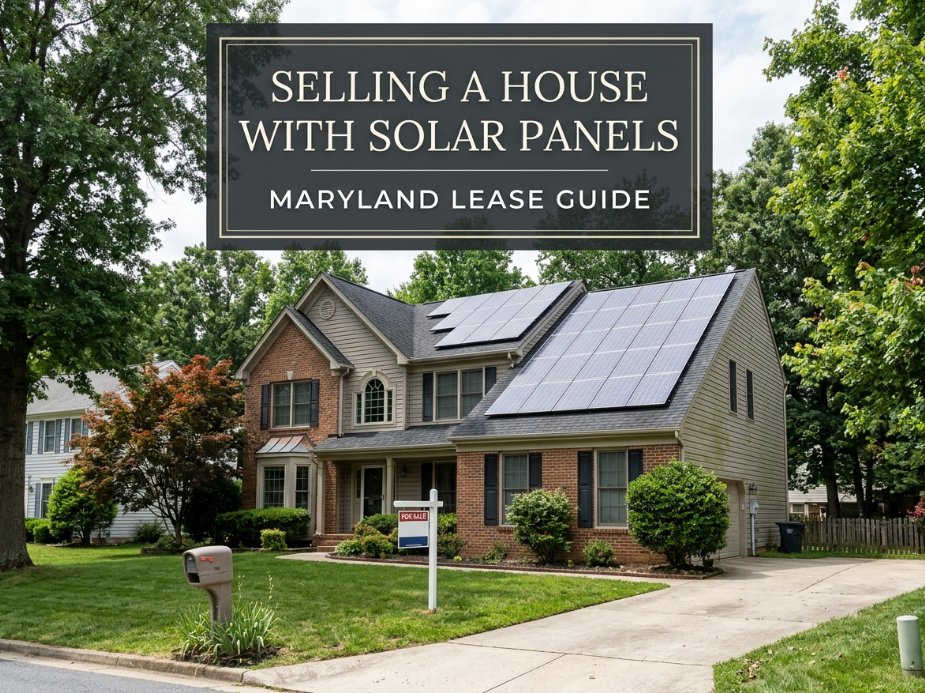
Selling a house with solar panels in Maryland depends on ownership. Paid-off panels usually transfer with the home. Solar loans may require payoff; leases or power purchase agreements may require buyer approval.
Before listing: Find your agreement, check the payoff or transfer terms, and confirm who owns the equipment.
First, Find Out What You Actually Own
Two Bowie homes can have identical panels but different sale terms. The contract makes the difference.
| Your solar arrangement | What the buyer needs to know |
| Paid off | The system generally transfers with the house |
| Solar loan | A remaining balance or security filing may need attention |
| Solar lease | The provider owns the equipment; transfer approval may be required |
| Power purchase agreement (PPA) | The buyer may be asked to take over a contract for solar electricity |
Remember: Do not advertise leased equipment as owned. Check the installation contract first.
Selling a Home With Paid-Off Solar Panels
Paid-off panels are usually the simplest. The equipment normally conveys with the home, but the installation invoice does not establish its current value.
For buyers: Share ownership, warranty, installation, and production records instead of promising lower bills.
Selling a House With Financed Solar Panels
Selling a house with financed solar panels depends on whether the debt is secured and what the buyer’s lender requires.
Ask your solar lender for:
- A current payoff quote and any fees.
- Confirmation of what secures the debt.
- Details of any UCC-1 filing or lien.
- Written instructions for release at closing.
- Whether an unsecured solar loan remains your responsibility.
Your title company can help identify what must be cleared before closing.
Selling a House With Leased Solar Panels
With leased solar panels, the provider usually owns the equipment. A buyer may love the house but still dislike the contract. Understand its terms before accepting an offer.
- Monthly commitment: Remaining term, annual increases, and maintenance costs.
- Transfer: Buyer credit review, forms, provider approval, and any fees.
- Buyout: Written quote and what happens to equipment ownership.
- Approval: Do not promise an automatic transfer without written confirmation.
What Happens to a Solar PPA When You Sell?
Under a power purchase agreement (PPA), you buy electricity generated by someone else’s panels. The bill can vary with production, unlike a fixed monthly equipment lease.
When selling a home with solar panels under a PPA, share:
- Price per kilowatt-hour and any annual escalator.
- Contract expiration and transfer requirements.
- Actual utility bills alongside solar charges.
Can a Buyer Refuse the Solar Lease?
Yes. A buyer can refuse the solar agreement, but that alone does not automatically cancel a signed home purchase contract. The agreed contract terms and deadlines matter.
Maryland’s Solar Panel Addendum, updated October 1, 2026, addresses:
- Time to review solar documents.
- Applications to assume a lease or financing.
- Certain termination rights if an application is denied.
- Contract deadlines and buyer approval procedures.
Use the applicable Maryland REALTORS forms and confirm the provider’s approval timeline early.
Do Solar Panels Make It Harder to Sell a House?
Not necessarily. Solar can attract buyers. Problems often come from unclear financing, roof condition, or missing records.
For a home in Upper Marlboro or Clinton, prepare a simple solar packet:
- Ownership or lease/PPA agreement.
- Recent utility bills and generation records.
- Roof and installation permits, where applicable.
- Inverter details, warranties, and service history.
- Provider contact details for a possible transfer.
Important: Show actual performance, not promised future savings.
Will Solar Increase Your Maryland Home’s Value?
Owned panels may add value, but the installation cost is not a price premium you can automatically charge. Buyers look at age, performance, warranty coverage, and comparable sales.
- Pricing: Start with a Maryland home valuation based on the entire property.
- Appraisal: Under Fannie Mae’s solar rules, leased and PPA equipment cannot add to appraised value. Financed systems depend on collateral and ownership details. See the solar eligibility guidance.
Inspect the Roof Before a Buyer Does
Buyers may welcome lower electric bills and still worry about roof leaks. Replacing the roof beneath solar panels can involve paying for removal and reinstallation.
- Condition: Check roof age, flashing, mounting points, and inverter performance.
- Coverage: Confirm whether workmanship and equipment warranties transfer.
- Paperwork: Consider a pre-listing inspection and check permit questions against our Maryland code-violation guide.
Solar Credits: What Does the New Owner Receive?
In Maryland, net metering credits on a utility bill are not the same as Solar Renewable Energy Credits (SRECs). The SRECs may belong to you or the solar provider, depending on your agreement.
Before advertising incentives: Check credit ownership and utility transfer rules.
Calculate What a Solar Buyout Does to Your Proceeds
Imagine your Prince George’s County home sells for $500,000. The solar company offers an $18,000 buyout. Paying that amount could reduce the money you receive at settlement.
| Your choice | What matters most |
| Buyer assumes the agreement | Buyer approval, future payments, deadline |
| You buy out the system | Actual payoff and whether ownership transfers |
| You negotiate a credit | Buyer acceptance and effect on net proceeds |
Compare the outcomes using Maryland seller closing costs and seller concessions.
The highest offer is not necessarily the one that leaves you with the most money.
Keep the Solar Transfer Off the Critical Closing Path
After offer acceptance, selling a home with solar panels becomes a scheduling issue. The solar provider, buyer’s lender, and title company may need separate approvals or documents.
- Confirm payoff, assumption, and security release in writing.
- Leave time for credit review and warranty-transfer requirements.
- If you are selling and buying a home simultaneously, consider how solar approval could delay both closings.
The Eze Way: Make the Sale About the House
At The Eze Way, I help Prince George’s County and DMV homeowners with pricing, preparation, marketing, negotiation, and settlement. Solar documentation belongs in that selling plan, not as an afterthought.
- Our role: Compare offers and explain how solar terms affect seller proceeds.
- Provider and lender roles: Verify contractual transfers, payoff amounts, and approvals.
- Your next step: Discuss your Maryland sale with Eze and bring your solar agreement.