
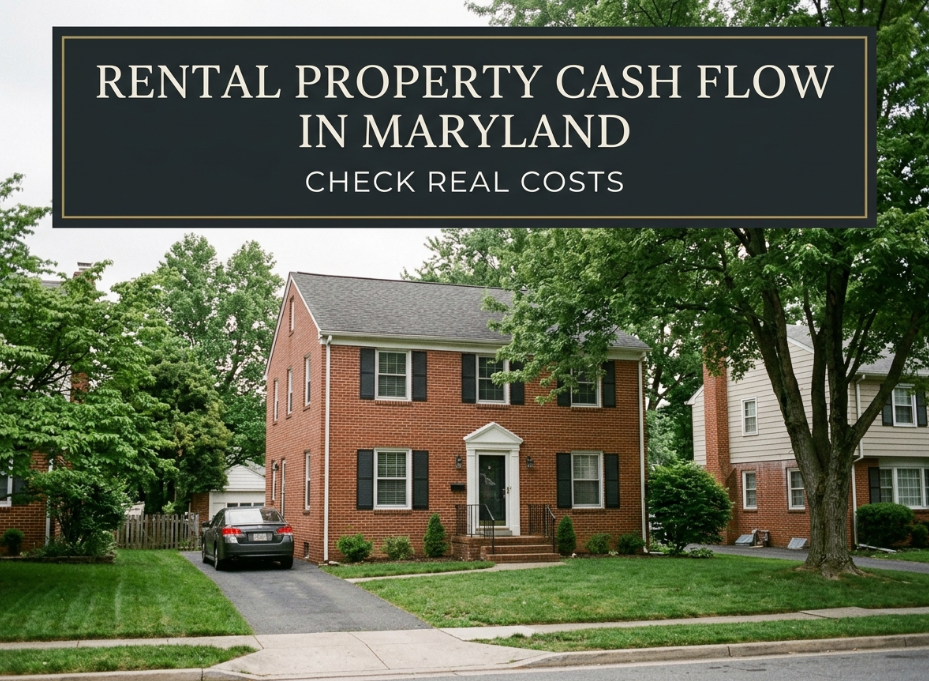

Rental Property Cash Flow in Maryland: What Is Left After the Real Expenses?
Rental property cash flow is the money left after realistic rental income is reduced by vacancy, operating expenses, reserves, and mortgage debt. The useful number is not rent minus the mortgage. In Maryland, an honest analysis should also reflect taxes, insurance, licensing, maintenance, local rent rules, and property condition.
At The Eze Way, I help Prince George’s County and DMV landlords ask the harder question: what does this property actually leave you?
Start with three rules:
- Use market-supported rent, not the number you need.
- Budget for costs that do not arrive every month.
- Test whether cash flow survives vacancy or a major repair.
Cash Flow Is Not Rent Minus the Mortgage
A rental collecting $3,000 does not produce $3,000 for the owner. Cash flow rental property analysis must account for recurring costs and realistic reserves before calling the remainder profit.
Rental property cash flow = effective rental income – operating expenses – capital reserves – debt service
This differs from net operating income. NOI measures property operations before mortgage debt. Cash flow shows what remains after financing and owner-planned reserves.
Start With Rent You Can Realistically Collect
The first line in a rental property cash flow analysis should be market-supported rent. For an occupied home, use the signed lease and collection history. For a new rental, use current comparable rentals.
My Prince George’s County rent-pricing guide explains how condition, parking, utilities, location, and competing rentals shape fair market rent.
Do not build the forecast around:
- The highest active listing nearby
- The rent needed to cover your mortgage
- A future increase that is not yet allowed
- Late fees or unpredictable income
Vacancy Belongs in the Calculation Even When Occupied
A tenant in place today does not eliminate future vacancy. Turnover can bring lost rent, cleaning, repairs, leasing time, and concessions before the next lease begins.
For how to estimate rental property cash flow, use the property’s own history first. If none exists, document a reasonable allowance from comparable rentals and expected turnover.
A zero-vacancy forecast is usually a best-case scenario, not an investment analysis.
Separate NOI From the Cash You Keep
Investors often mix up net operating income and cash flow. That can make two properties look more similar than they really are.
| Measure | What It Shows |
| Effective gross income | Rent and recurring income after vacancy |
| NOI | Effective income minus operating expenses, before debt |
| Cash flow | NOI after debt service and planned reserves |
Two buyers can therefore purchase the same house with different loans and produce different monthly cash flow.
Include the Expenses Quiet Months Hide
A useful rental property cash flow statement often starts with annual figures because taxes, insurance, licensing, repairs, and replacements do not arrive evenly every month.
Include costs such as:
- Property taxes
- Landlord insurance
- HOA or condominium charges
- Owner-paid utilities
- Property management
- Routine maintenance and repairs
- Landscaping or pest control
- Rental licensing and compliance
- Vacancy and leasing costs
- Capital expenditure reserves
- Mortgage principal and interest
Prince George’s County calculates property tax from assessed value and the applicable tax rate, so use the actual current bill rather than a generic national percentage.
A Maryland Example Shows Why Every Line Matters
Consider a hypothetical Prince George’s County house renting for $3,200 monthly. This example is only a cash-flow illustration, not a rent estimate for a specific home.
| Monthly Item | Amount |
| Gross rent | $3,200 |
| Vacancy allowance | -$160 |
| Property taxes | -$450 |
| Landlord insurance | -$150 |
| Management allowance | -$256 |
| Maintenance reserve | -$160 |
| Capital reserve | -$160 |
| HOA | -$100 |
| Owner-paid utilities | -$75 |
| Licensing and administration | -$25 |
| Mortgage principal and interest | -$1,500 |
| Estimated monthly cash flow | $164 |
The home collects $3,200, yet estimated cash flow is only $164. Annualized, that is $1,968 before income taxes and costs not captured by the assumptions.
Positive Cash Flow Needs a Cushion
A positive cash flow rental property earns more than it costs under the assumptions used. A negative cash flow rental property requires the owner to contribute money.
There is no official universal amount that makes cash flow “good.” A $150 monthly surplus may work for one property and be dangerously thin for another with aging systems.
Test the cushion:
- Can one vacant month erase the year’s profit?
- Can reserves absorb a major repair?
- Does the deal survive higher insurance?
- Would management fees turn it negative?
Good cash flow should survive ordinary ownership friction.
Prince George’s County Rules Can Change the Forecast
Local rules can affect income and expenses. Under Prince George’s County’s Permanent Rent Stabilization and Protection Act, regulated non-senior units have a 5.7% maximum annual increase from July 1, 2026 through June 30, 2027, although exemptions apply.
Do not automatically model aggressive rent growth. Confirm whether the property is regulated, exempt, licensed by the county, or licensed through a municipality before projecting future income.
The official county rental licensing guidance also explains which municipalities handle licensing separately.
A Cash Flow Statement Is Not Your Tax Return
Cash flow tracks actual money moving through the property. Taxable rental income can differ because federal rules may allow expenses and depreciation that do not match cash timing.
The IRS residential rental property guidance explains rental income, expenses, depreciation, and Schedule E reporting. Depreciation can reduce taxable income without being a monthly cash payment.
Use cash flow to judge liquidity, and use qualified tax advice for tax treatment.
Stress-Test the Property Before You Depend on It
A strong rental property cash flow calculation formula should be run more than once. The base case shows expectations. A downside case shows how quickly the cushion disappears.
Test scenarios such as:
- One month of vacancy
- Rent 5% below your estimate
- Higher insurance at renewal
- A major first-year repair
- Professional management replacing self-management
- No rent increase at renewal
If a small change immediately creates negative cash flow, the property has little margin for error.
African Professionals Should Separate Cash Flow From Equity
For Nigerian and African professionals building Maryland property portfolios, rental ownership may support long-term wealth, family plans, or diversification beyond salary income.
Appreciation, mortgage principal reduction, and future equity are not today’s spendable cash flow. Keep them separate when deciding whether the rental can support itself now.
That matters when another mortgage, family obligations, travel, or future investments compete for the same reserves.
Analyze the Property Before Calling It a Good Rental
Through The Eze Way’s landlord rental services, I help owners and investors across Prince George’s County and the DMV think through pricing, expenses, cash flow, tenant appeal, and long-term value.
My nearly two decades as an agent and investor have taught me to distrust a deal that works only when every assumption goes right. A useful analysis shows where the money goes and what remains.
If you are evaluating an existing rental or purchase, bring the rent, loan terms, tax bill, insurance, HOA costs, property condition, and management plan.
You can discuss the property and cash-flow numbers with Eze before deciding whether the rental deserves more capital, a different strategy, or a place in your portfolio.
Five FAQs
How do you calculate rental property cash flow?
Subtract vacancy, operating expenses, reserves, and mortgage debt from realistic rental income. Use annual figures first, then divide the final result by twelve for monthly cash flow.
What is good cash flow for rental property?
There is no universal dollar target. Good cash flow should stay positive after realistic expenses and still leave enough cushion for vacancy, repairs, and cost increases.
What causes negative cash flow on a rental property?
Negative cash flow happens when collected rent cannot cover operating expenses, reserves, and debt service. Overestimated rent, high financing costs, vacancy, or repairs often cause it.
Should I include property management if I self-manage?
Yes, including a management allowance shows whether the property remains viable if you later outsource the work and prevents your unpaid labor from hiding weak economics.
Is rental property cash flow the same as ROI?
No. Cash flow is the dollar amount left after property costs and debt. ROI measures the return relative to capital invested, so the metrics answer different questions.